Showing posts with label orphan animal. Show all posts

Thursday, February 19, 2015

The Cost of Wildlife as Pets


Working in my job, I get to interact with a variety of incredible animals. On a daily basis I can talk to a tortoise, converse with a corn snake, vocalize with a vulture, and chat with a chinchilla. I also am able to observe the wild animals that dwell on the property of the nature center. But it's not always fun and happy stories. This week was one of those harder days. 

I received a call about an elderly gentleman who was getting ready with his wife to move from their home of 30+ years into an assisted living facility and needed to find a home for his pet bird. Only this was no parrot or canary, this was a grackle, a wild songbird native to much of the United States. I was told the man had found it as a baby and decided to raise it himself and keep it as a pet. I was unsure what I would find when I walked into the house, but had prepared myself for both the best and the worst. 

What I found when I walked into the kitchen was this:

Here was a bird that was born in the wild, and had spent the 7 years of his life in this small, dirty cage. The gentleman thought he was doing the right thing, he had found the bird young and alone and thought it was abandoned or orphaned. He cared for the bird, gave it a home, and food and water. Unfortunately, the cage was too small, and there was no place in the cage where the bird could turn around without brushing his feathers against the metal bars. In addition, although the man knew that grackles are omnivores and need both animal protein and plant-based foods in his diet, instead of eating insects and seeds, the grackle was fed fruit, canned beans, scrambled eggs, and spam. All of this took a toll on the grackle's body and a bird that should look like this:
instead looked like this:
The malnutrition, cramped cage, and inability to bathe (his water was offered in a coffee mug) left his feathers tattered, oily, and dull. 

When we find a wild animal, it's easy to fantasize about how neat it would be to have that animal as a pet in our home. But before you take home that baby bird, rabbit, or box turtle you just scooped up in your hands, take a moment to think about it from the animal's side. If you keep that animal as a pet, it will never return to its home, it will never find a mate, and never rear young. And for some species like the eastern box turtle, whose numbers are in decline, the loss of even one breeding adult can have a significant impact on local populations. Instead of taking an animal into your home, perhaps instead think of ways you can support the animal in its home. You could turn your backyard into a wildlife habitat (look for ideas here, here, and here!), support a national organization like The Nature Conservancy or your local nature center (like Briar Bush!) through donations or by volunteering. Keeping wild animals wild is the only way to ensure we continue to be inspired, amazed, and comforted by their presence for years to come.

So what happened to the grackle? He was taken to the Schuylkill Center Wildlife Rehabilitation Clinic (another great cause to donate to!) where he was given a larger cage and a proper diet. There it is hoped that he will molt his tattered old feathers and replace them with the feathers that will return him to his natural beauty. Because he has been in captivity for so long he cannot be released into the wild, but he will be given a good quality of life under the care of knowledgeable professionals. He just may come to live with me at Briar Bush once he's healthy enough and teach others about helping wild animals in their own homes.

For more information on what you should do if you find a wild animal that you think needs help, read my post, "Oh Baby!"

Friday, October 7, 2011

Oh Baby!

(originally posted March 24, 2011)


At this time of the year, phones at wildlife rehabilitators and nature centers alike light up with questions about baby animals, especially birds and rabbits. Most of the time, the call is coming from a concerned citizen, wondering what to do about seemingly orphaned wildlife. Did the mother abandon it? Will it make it on its own? Should I take it to a rehabber? Should I take care of it myself? All of these are valid concerns, and I thought I would use this week's discussion to answer a few of these most common questions.

Did the mother abandon it?
This American robin fledgling is perfectly 
healthy and is waiting for its parents to
deliver its next meal.
This question can often be answered by simply watching the baby animal for a while. For birds, watching it for 30 minutes should be ample time to see one or both of the parents deliver food to it. The parents will leave the fledgling (a bird who recently made its first flight out of the nest) in one place while they busily collect food to bring back. Even if you don't see the parents within 30 minutes, the general rule of thumb for birds is if the chick is fully feathered and out of its nest, its more than likely doing just fine.


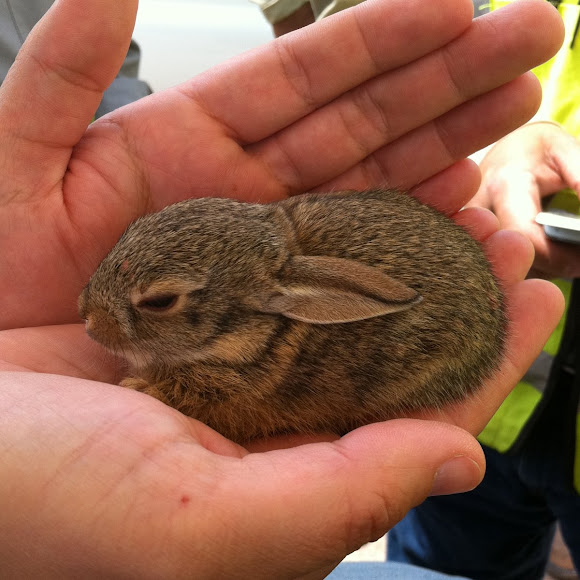
Even a rabbit this small
can take care of itself!
When it comes to baby rabbits (called "kittens" believe it or not!), the young achieve independence at a very young age, just 4-5 weeks. A rabbit small enough to fit in the palm of your hand is already old enough to fend for itself. If you find a nest of rabbits unattended, don't be alarmed. Just like with birds, the mother will leave her young for sometimes hours at a time in between nursings. As long as the young appear healthy, you can let them be.


Should I take the animal to a rehabber?
If the animal that you find does not seem to be doing well on its own as described above, I recommend that you first call the wildlife rehabilitation center before moving the animal. These professionals will ask you questions to gauge the status of the animal and will be able to then make the proper call of whether it would benefit from additional human help. Moving an animal unnecessarily may do more harm than good. Also, many wildlife rehabilitators are individuals operating out of their homes and may not be home if you show up without calling first.

Should I nurse the animal back to health myself?
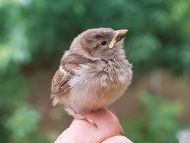
As cute as they may be, it's not a good idea
to try to raise wild animals yourself. 
In short, this is not something that I would advise, even to someone who has a strong knowledge of wildlife. First of all, keeping a wild animal in your home, even for a short period of time, is against the law. Wildlife rehabilitators have licenses to conduct their work, and have undergone extensive training, education, and testing as a requirement of their permit. Taking care of a wild animal, especially a baby, requires round-the-clock attention. Baby birds for example must be hand-fed a bare minimum of once an hour (the chickadee chicks in my backyard are fed every 2 minutes!), from sunrise to sunset, every day. They must also be kept warm and clean. As the saying goes, this work is best left to the professionals.

This spring, enjoy watching all of the wildlife babies around you and appreciate the tireless efforts of their dedicated parents. And if you happen to meet a wildlife rehabber this spring, thank them for their tireless efforts as well!