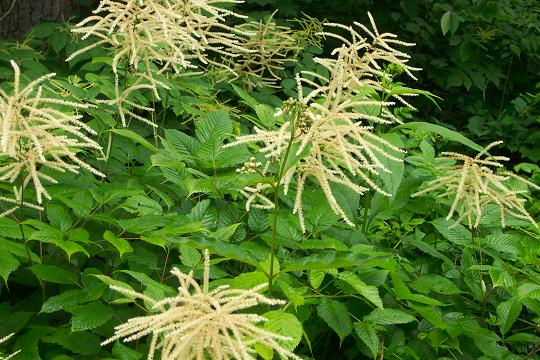
"What is that?"

"I just pulled a bunch of that stuff out of my yard, what is it?"
A friend and fellow bird nerd was over at my house last weekend and asked me about this massive plant growing out of my flower bed. She told me that she had done some gardening to try to make room for plants that would benefit her backyard grey catbird pair. I laughed and gestured toward the plant; "this is what your catbirds eat!" American pokeweed is often vilified for its toxicity and large size, but it is of great value to wildlife, especially birds.
 |
| This is like fugu in a can. Would you trust it was prepared properly? |
Talk to most anyone who was listening to music in the 70s and the first thing they'll talk about when you mention pokeweed is "that poke salad song." The song "Poke Salad Annie" was released in 1969 and was thereafter covered by a host of artists, including Elvis himself. The song talks about a southern dish called "poke salad" in which the leaves of pokeweed is eaten. What the song doesn't mention is that if you don't cook the leaves right, they could kill you. If you eat the stem, it could kill you. If you eat the berries, they could kill you. And if you eat the root, that's right, it'll give your hair vibrant, full, body. Of course it doesn't give your hair vibrant, full, body! It can kill you even more! Pokeweed is full of a host of different toxins that most often cause severe vomiting and diarrhea, but can cause death due to paralysis of the respiratory organs. These toxins are present throughout the plant, but are most concentrated in the root and seeds.
If you are unfamiliar with pokeweed, at this point you may be thinking, "ok, so don't eat it, what's the big deal?" Well, the problem comes when pokeweed matures in late summer and goes from being a nondescript, albeit large (up to 10' tall!), plant to this stunning beauty:

Those magenta stems and dark purple berries draw a lot of attention, especially from children. When children eat the berries, they ingest those toxic seeds, and there are cases in just a few berries were enough to cause the death of infants. Also, according to the Ohio Agricultural Research and Development Center, the toxins in pokeweed are capable of being absorbed through the skin, so even contact with the plant may pose some risk, something I never knew about until doing research for this blog.

Making natural dyes from pokeweed may give you very colorful results, but the Ohio Agricultural Research and Development Center advises that you wear gloves just to be safe.
So although I am not a fan of removing native plants, if you live in a household with small children, you may want to cut this plant back before it produces its summer berries.
Why not get rid of pokeweed altogether? It dominates the area where it grows with its large leaves and tall, branching stems, and has the ability to sicken if not kill both humans and livestock.

 I love pokeweed because birds love pokeweed! Bluebirds, American robins, grey catbirds, northern mockingbirds, bobwhite quail, northern cardinals, and cedar waxings all love poke berries. I always know when my neigborhood birds have been eating my poke berries because I find purple bird poop in my backyard. Other animals like pokeweed too, including foxes, opossums, raccoons, white-footed mice, and the giant leopard moth. In my own backyard, I find a tiny cricket on my pokeweed at night that I don't see anywhere else in my yard. And remember, insects are bird food too!
If keeping pokeweed around as a species for birds isn't a good enough reason for you, consider this: research using a protein found in pokeweed has been found to reduce HIV in mice, and is being studied as a treatment for T-cell leukemia, lymphoma, hepatitis-C, and the common cold, and Hodgkin disease. This pesky poisonous plant just may help to save lives someday.

My friend may have taken out the pokeweed in her backyard this year, but she doesn't have to worry. If she wants it back for her catbirds next year, the plant will regenerate next spring from its large (and very toxic) root. Not to mention pokeweed seeds can remain viable in the ground for over 40 years! Pokeweed may be toxic if eaten, but its value to wildlife and human medicine makes it worth keeping around for far more than 40 years.