Thursday, October 27, 2011

It's Always Halloween in the Natural World


Happy almost Halloween, everyone!


A couple of weeks ago I found myself trying to think of animals and plants that had names that were associated with Halloween.  Turns out it was a pretty fun mental exercise and a good idea for a blog post.  Now some of you may be wondering "Gee Katie, if you had this idea for a blog post weeks ago, why did you not post last week?"  Turns out having a full time job and working on one's M.S. degree takes up quite a bit of one's time. heh.  And if any of you really were wondering where my post was last week, then that means you actually follow this blog with some regularity and I love you.  I'm guessing most of my readers are more along the lines of "She posts each week?  I thought it was once a year...hua."


Anywho, on to the Halloween-themed plants and animals!


Batfish
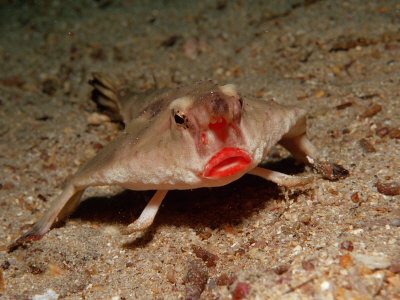
Is it just me, or does this red-lipped batfish make anyone else think of Rocky Horror Picture Show?

There are actually about 60 members of the batfish family, and no, none of them are named 'Dracula'.  Neatest thing about these guys other than their appearance?  They're poor swimmers, so get around by walking on the ocean floor using thickened pelvic and pectoral fins!

Ghost Orchid
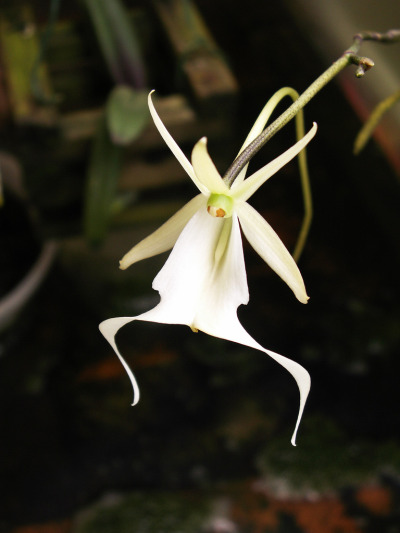
The ghost orchid is native to the United States and can be found in southern Florida.  It got its name because the roots of the plant often blend in so well with its host tree that the flower seems to be floating in space just like a ghost.  Nothing scary about this ghost though, just pure beauty.

Gray Catbird
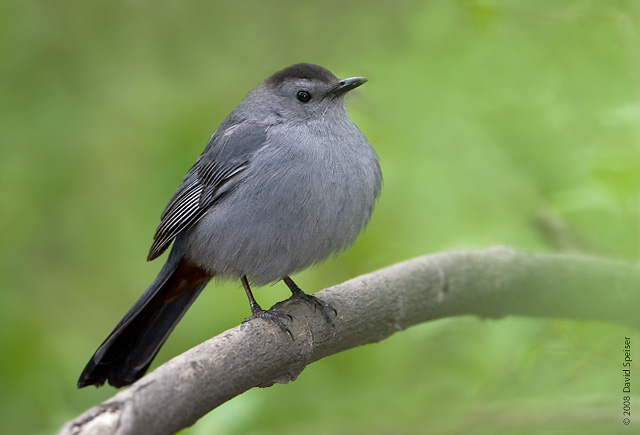
You guys know me, I love my birds, and the grey (gray? I still can't decide which spelling to use) catbird is no exception.  The distinctive 'meow' call that the species gives is how it got its name.  What some may not know is that the catbird is also a talented yet shy songster.  Unlike its cousin, the northern mockingbird, who likes to sing and be seen, the catbird is more likely to warble quietly from deep within a thick clump of vegetation.

Spider Crab
A giant Japanese spider crab in front of her...what is she taking a picture of?

Get a load of those legs!  It's easy to see how spider crabs get their name.  However if you look again, you'll notice that it's only spiders that have 8 legs; crabs have 10, giving them one of my favorite terms I like to use to nickname my pet hermit crabs, decapods. (Want to learn more about spider crabs? Check out my blog entry on them here!)

Witch Hazel

Although witch hazel has a very distinct and even bewitching look to it, the witch part of its name doesn't come from entirely from a person who can turn you into a newt and is lighter than a duck ("Burrn her!").  Witch is suspected to have its origins from the Middle English wiche, meaning "pliant" or "bendable".  Although seeing as stems of witch hazel were also sometimes used as divining rods, witch may just refer to witchcraft after all.

Goblin Shark

Now there is a face only an Ichthyologist could love (hi Mary!).  I think the origins of this deep sea fangly fish's name are no mystery. However much about the fish itself remains a mystery, and it is thought to be one of the rarest-observed fish in the world. In addition to its distinctive snout, the goblin shark is also equipped with jaws that are able to protrude very quickly in order to snatch up soft-bodied prey.

There you have it, some of the wonderful and unusual plants and animals that share their names with creatures we associate with this time of year.  While the ghosts, goblins, and witches of Halloween might give us a fright, each of these species are fascinating and far less scary.  Though come to think of it, if I ever saw a goblin shark in person, I'd probably give him all of my candy.

Saturday, October 15, 2011

The Trees are Out to Get Me

The trees of Pennsylvania are trying to kill me.  They try to kill me every year.  Oh sure, in the fall people oooh and ahh over the magnificent beauty of fall foliage, but that's just a disguise because given the opportunity, the trees in Pennsylvania will try to kill you, too.

Leaves aren't the only thing falling from trees in the autumn.  Here in Pennsylvania there are three kinds of trees that are dropping their fruit and making people duck and take cover.  Here are the three shady culprits and their weapons of choice.

Assailant #1: Oaks

Weapon of Choice: Acorns

Sure, the mighty oak's acorns may not look like a formidable murder weapon, but that's what they want you to think.  But don't let these squirrel treats fool you, they are capable of inflicting personal injury.  Just the other day an acorn from a towering 150 year old black oak came slamming down so hard on the pavement in front of me that it made me jump and swear that the acorn hadn't just fallen, but that the tree must have thrown it at me. (Thank goodness the tree has as bad of aim as I do)  Acorns are even more deadly in great numbers.  Two years ago I was hiking on a hilly nature trail covered in a bumper crop of acorns (also known as a mine field) and nearly fell on my face several times.  

Why do oaks want to kill me?  Maybe they're taking their frustrations out on me from having squirrels steal their nuts year after year.

Assailant #2: Black Walnut
This black walnut was recently apprehended and put behind bars.
(ok, make that "behind chain link fence")

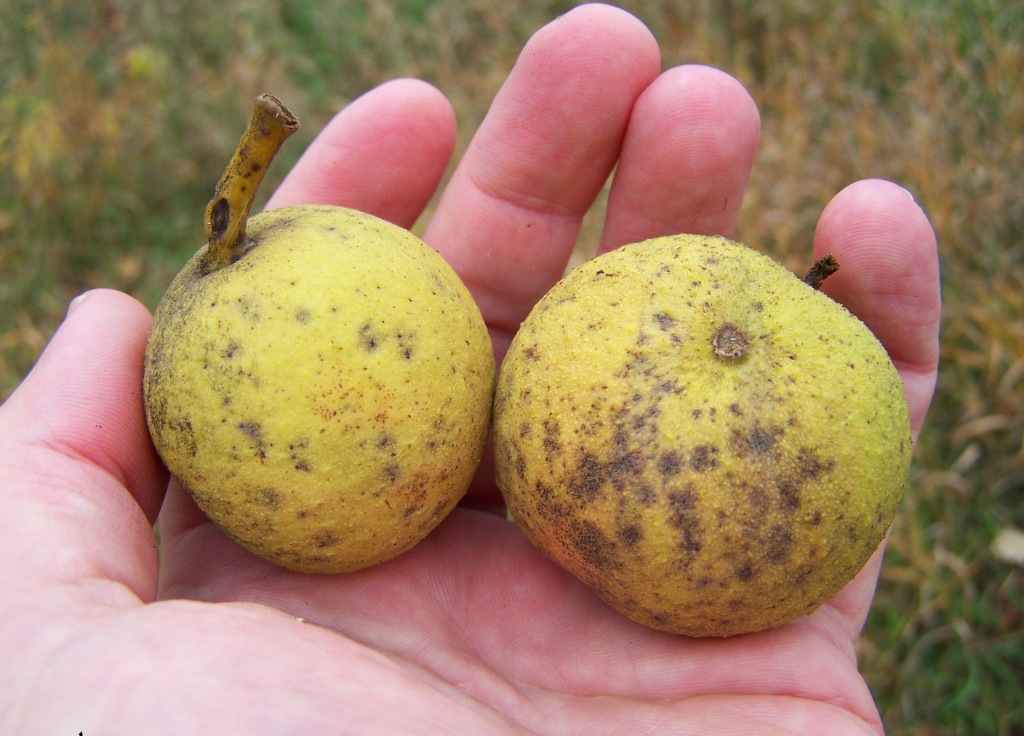
Weapon of Choice: Black walnuts

The black walnut's weapon of choice packs a punch on many levels.  First, there is the immediate danger from being hit on the head by one of these green titans.  If the black walnut tree misses you on the initial drop, it can find you for revenge later.  All you have to do is touch the black juices of the walnut husk and your hands will be stained for quite some time.  This is the walnut's version of the black spot of death, a trick that it learned from the pirates of Treasure Island.  

Even innocent fish are not immune to this villain's attacks.  The green husk of the walnut contains a chemical called juglone, which when mixed with slow-moving or stagnant water, kills all of the fish residing beneath the surface.  This is such an effective fish-killer that Native Americans were known to use black walnut fishing as a reliable way to collect fish.  It seems that the black walnut has acquired a co-conspirator...


Assailant #3: American Chestnut

Weapon of Choice: Burrs
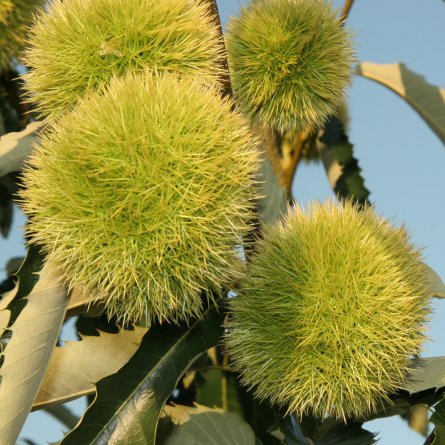
The American chestnut may be iconic come the holiday season, but that's only because by then this tree will have run out of ammunition.  Make no mistake, right now this tree will leave you with anything but a sense of cheer.  No, right now this tree will leave you with a sharp, prickly, vegetative, green sea urchin sticking out of your cranium.  The burrs of the American chestnut are so sharp that I can barely manage to pick one up with my bare hands.  I can only imagine the pain of having one of these dropped on your head from 20 feet or greater must feel like (especially those poor bald-headed victims).  I think no greater explanation must be made as to just how greatly armed and dangerous this assailant is.  

The American chestnut may have a reason for its outlash, as the species is currently under siege by chestnut blight.  I don't blame those trees that are sick for lashing out, but those trees that are healthy are really all bark and no blight.

As you are walking the nature trails this fall, admiring the beautiful fall foliage, be sure to keep one eye open at all times and wear a hard hat.  These three assailants may be lurking in the woods near you.  The trees haven't killed me yet, but that doesn't stop them from trying.

Friday, October 7, 2011

It's Fall Migration...Get Out Those Life Lists!

October 7, 2011

As the seasons transition, you may find that the color of the leaves and daily temperatures aren’t the only thing changing.  If you’re a birder, you may notice some new feathered faces in your area as well!  Fall migration is in full swing, giving bird lovers everywhere a chance to see rare and uncommon birds as they make their way south.

Why do birds migrate in the first place?  The most common answer is that birds migrate due to the cold temperatures.  And that is true… in a roundabout way.  Birds don’t migrate because they can’t handle the cold, their feathers act as a great form of insulation which is kind of like putting on a big, poofy sleeping bag when you need it.  Rather it’s the food of the birds that migrate that can’t handle the cold.  Birds that eat things that aren’t available in the winter, such as insects, nectar, fruit, or aquatic vegetation, must fly south in order to find food to eat.  And as they travel south, it’s our backyards that many of these birds choose to fuel up.

In my area of Pennsylvania, fall and spring migration is a great time to see warblers such as the black-throated blue and the black and white.  I can never see or say the name “black-throated blue” without thinking that it’s really the “black and blue warbler.” Imagining a tiny bird with a shiner is kind of a funny mental image.  Today I noticed a female black-throated blue warbler (who is neither black nor blue) making her “refueling” stop at a compost pile, acrobatically catching flies with a snap! of her beak. 

While living in Florida, I didn’t see American robins unless it was migration time.  Then these American icons would arrive en masse to descend upon the local lawns in search of worms and other tasty invertebrates.  Once when I was washing my birds’ cage outside with the hose (I have two cockatiels…they don’t migrate.), ten or so robins came down to drink from the stream of water that was running into the drive of my apartment complex.

Although the fall and spring migrations don’t last very long, they are always a treat.  Across the United States, bird enthusiasts gather to watch hawks, songbirds, and even tiny hummingbirds at favorite stopover locations.  Hopefully you’ll spot a feathered gem this fall too!

I've Upgraded!

October 7, 2011


Upon logging on to my page on Facebook today, I was promptly informed that the discussion boards are vanishing at the end of the month. Curse you Facebook and all your changes!  Well, it all works out for the better because now I have an official blog blog!  This thing is so fancy...there's underlining, I can put things in bold, I can even include pictures!


Me getting (fiddler) crabs in Florida.

I've graduated to a real grown up blog!  I look forward to using this new space to the fullest extent...that I'm able to figure out without enrolling in an html class.  Over the next couple of days I'll be going through the archives and sprucing them up by adding some pictures here and there.  So stay tuned, subscribe, stalk me if you will (in a friendly, non creepy, I'm-The-Nature-Geek's-biggest-fan kind of way), to see the latest changes!

Table Scrap Ecosystem

(originally posted September 25, 2011)


This spring, I purchased an Acme Cheap-O plastic compost box, so that I could do my part to reduce waste going into landfills. That and my garden could use all the help it can get since it is located beneath a dementor life-sucking life form called the Norway maple. I figured watching the decomposition process might be kind of neat (oooo! Look at all the mold spores!), but I had no idea just how fascinating it would be. Compost bins not only benefit our gardens and landfills, but they introduce an entirely new ecosystem into your yard.

If you don’t know much about composting, let me give you a brief run down. Composting is a process where you take your food waste and through the help of heat and nature’s decomposers, turns it into nutrient-rich soil. You can’t compost everything, dairy and meat are the two main categories of things that cannot be composted—they putrify and take too long to decompose, but there is a lot that you can compost. If it comes from a plant, it can be composted. Fruits, vegetables, leaves, twigs (though I wouldn’t put in twigs much bigger than your finger in diameter), and even tea bags can be composted. Some people even compost paper, but I recycle mine instead.

One of the very first things I learned about composting is if you compost it, they will come. You needn’t worry about adding critters like such as the exotic and invasive red wiggler worm to your compost pile; if you’re piling up tasty food scraps, the critters will come to you. My compost pile currently harbors a vast variety of life, including ants, more pill bugs (roly polys) than I’ve ever seen in my life, millipedes, and a few species of flies. I also have a few very intelligent and very well-fed spiders in my bin. The flies that live in my compost bin are mainly fruit flies and black saw flies; neither have any interest in humans, unlike the pesky house fly, deer fly, and horse fly. In fact, the black saw fly actually drives house flies away; any insect that can do that is welcome in my pile of refuse anytime.

All of these invertebrates live right there in my compost bin, their own micro habitat. They complete their life cycles and in the process, they turn what was once waste into valuable soil. If you have someone in your family that likes to look for insects and other creepy crawlies, a compost bin is a veritable gold mine. I have to wonder what my neighbors think though when they see me staring transfixed into my compost bin.

The Do-Nothing Killer

(originally posted September 20, 2011)


The Nature Geek has a guest blogger today, which is me, Mr. Nature Geek. I know some of my antics (mishaps even?) have appeared in this blog before so I figured I should finally tell a story of my own. It’s about a lowly plant:

Imagine you’re doing what you do every day, maybe chatting with a co-worker at work. And then all of a sudden…a tiny bit of dust falls from the ceiling lands on your shoulder. Just dust. No problem! Except for the fact that the coworker you were just talking to pointed at you, went bug-eyed and tore off down the hall screaming something about a hideous monster that was going to eat everybody alive. A quick check in the bathroom mirror reveals nothing amiss, though exiting reveals that the office is deserted. As you head outside armed men flood the street and rush towards you, brandishing clubs, torches, and pitchforks, screaming “KILL IT!”

Now, before things get messy and not-G rated, we’ll end that story just by saying it ends not so well. But what kind of story is that? It didn’t have much plant life, but it is the story of what makes poison ivy “poison”. So what is really happening? Bear with me as I geek out.
This story starts with my “favorite” plant, poison ivy. Damaging a leaf releases sap full of a type of molecule called urushiol. These little monsters are oil-like, and so can easily penetrate your skin, walking right through the castle’s walls. One finds a random protein molecule on a cell (that cell is you, by the way) and bonds tightly to it. And then, (dramatic pause), it just sits there and does nothing. The cell keeps living happily. No explosion. No jolt of lightning. Just a little dust particle sitting on the shoulder of some cell and doing nothing.
Now what? That urushiol molecule keeps doing nothing. But other cells, part of your immune system, detect that do-nothing molecule on you and pretty much go bug-eyed and run screaming, just like that co-worker. That tiny little urushiol molecule makes them think you might be a brain-eating zombie, or worse, a virus infected cell. Other well-armed members of the immune system respond to that call (cue angry townsfolk) and flatten the place with you, a poor innocent cell, included.

As a real person however, you see the destruction in the form of blisters, redness, swelling, and itching. So the next time you wonder if that patch of green you just walked through was poison ivy, think of that story of an innocent cell and the "killer" molecule that does nothing. Just as every plant and animal has its own story, the molecules they use each have their own.

Hermit Crabs: It's What's Inside That Counts

(originally posted September 12, 2011)


Over the summer, you may have collected many souvenirs—sea shells, a tan, and a really tacky t-shirt or two—and some of you may even have a new pet in the family this fall. Yes, each summer, countless children convince their adult chaperones to purchase a hermit crab; you know, the one with the Spiderman shell. Often these little land crustaceans aren’t given much thought as they hide in their shells most of the time, but they are pretty fascinating and misunderstood pets. Today I thought I’d dispense some geeking out of the pet variety.


First off, there are more than one species of hermit crab. There are about 15 species of land hermit crabs (1100 species of hermit crabs altogether!) and of those, I’ve usually seen five species being sold as pets (purple pincher, Ecuadorian, ruggie, strawberry, and Indonesian) , with the purple pincher being the most common. Each species has its own characteristics, from different eye shapes, to the color of their exoskeleton.
The purple pincher, the most common pet hermit crab species

It's easy to see how the strawberry hermit crab got its name!

By far my favorite species of hermit crab: the Ecuadorian. Look at those adorable eye stalks!

Although we use the term “hermit” to describe someone who is antisocial, hermit crabs prefer to live in colonies. That’s not to say that they are buddy-buddy with their neighbors, rather hermit crabs live in colonies to make it easier to find a bigger shell as they grow and molt. When hermit Bob down the shore changes his shell, Abby takes his now vacant shell, and Doris takes hers, and so on. Pet hermit crabs will do this too if you have several of them in a tank.

My next geek-out fact is one big, awesome category, and that is hermit crab behavior. Hermit crabs may not look like they exhibit much behavior at all, but that’s because they are nocturnal—they do their crabby thing after the lights are out. They dig, climb, fight (sometimes using only their antennae…not very intimidating if you ask me), and even make noise. When a crab gets really mad, it’ll make a sound called “stridulating” which has been described as a cross between a frog’s croak and a cricket’s chirp. Check out this video of a Ecuadorian hermit crab stridulating (she refers to it as "chirping"), which in this case translates to Put me down!
If you watch closely towards the end, you'll see the crab reaching over his shell with one of his antennae and bapping her on the finger as crabs will do to each other when perturbed.


Cockatiels find hermit crabs fascinating too!

Finally, perhaps the least-known fact of all about hermit crabs is that they are not bred in captivity; each one is taken from the wild. This does not mean that you can’t have a hermit crab as a pet however; there are many people who are looking for new homes for their tiny pet. Each and every one of the 55 (yes, 55) hermit crabs I have ever owned were all given to me by their owners. Hermit crabs can be fascinating pets, and can live to be 25 years old under the right conditions! Have crabby questions or a problem that is really pinching you? Just ask!