Monday, November 28, 2011

And Now, We Sleep.

Another Thanksgiving has come and gone.  We've stuffed our faces with turkey (or tofurky for my vegetarian friends), dodged pepper-spraying wackos at Wal-Mart, and surfed ourselves silly on Cyber Monday.  I don't know about you, but after all of that excitement and caloric intake, I can't think of a better thing to do than take a nice long nap.  Heck, I just might hibernate.

That about sums it up after Thanksgiving dinner.

Animals hibernate too...just not for the same reasons.  For animals, hibernation is a way to escape periods of winter where food is sparse or temperatures are too cold for survival.  Lots of animals hibernate: bats, woodchucks, frogs, turtles (really most if not all northern reptiles and amphibians), but not bears.  Why aren't bears considered true hibernators?  Although a bear's heart rate and respiration may lower quite a bit during their winter dormancy, it's not nearly to the extent of a true hibernator like the little brown bat, whose body temperature approaches that of the air temperature and only breathes about once per hour.  Keep this in mind if you ever think about going bear tipping, folks; true hibernators take time to wake up, bears don't.


In my opinion, frogs are one of the most fascinating hibernators.  A hibernating frog on land can be found encased in ice, and even with ice crystals within its body cavity, but will still thaw out and come back to life in the spring.  How does the frog survive?  It has a high concentration of glucose (sugar) in its vital organs, which acts as a kind of antifreeze.  

That is one cold amphibian!

Now you probably knew a thing or two about hibernation before reading this, but did you know that there's also a kind of "hibernation" that takes place in the summer?  Just as in winter, there are some animals such as Pennsylvania's red-backed salamanders that can't take the extreme temperatures and dryness that comes with summer.  So to cope, they use a summer dormancy called estivation.  The red-backed salamander spends both winter and summer safely tucked beneath a log, until the cool and rainy days of spring and fall arrive.  Sleeping through half of the year--they must be part teenager.

So go eat your leftovers, share this blog with a few people (hey, I'm not above some self-promoting here), and then return to your holiday slumber.  I'm going to go and see if I can convince some people that bear tipping is a real sport.

Sunday, November 20, 2011

Test your Turkey Trivia!

As we prepare for our Thanksgiving feasts, we wash the green beans, melt the marshmallows (after eating half the bag), warm the bread, and of course, try not to burn the turkey ("Don burnt the turkey!") or blow up your house with it.  But how much do you know about this plump bird which we call dinner?  Sure, most everybody knows that Ben Franklin wanted the wild turkey to be our national symbol, but I'm talking biology here, folks!  So let's gather around the bloggy table,  give our thanks for the internet, and learn more about turkeys.


  • Humans aren't the only ones to gather in large groups; turkeys can be found in large flocks as well, consisting of one dominant male (called a tom) and several females (called hens) and their young.


    • And speaking of young, baby turkeys are called poults and are extremely adorable.
    Admit it, you're totally thinking "D'awww" right now.

    • Male and some female turkeys have beards, which contrary to their appearance, are made of modified feathers, not hair.


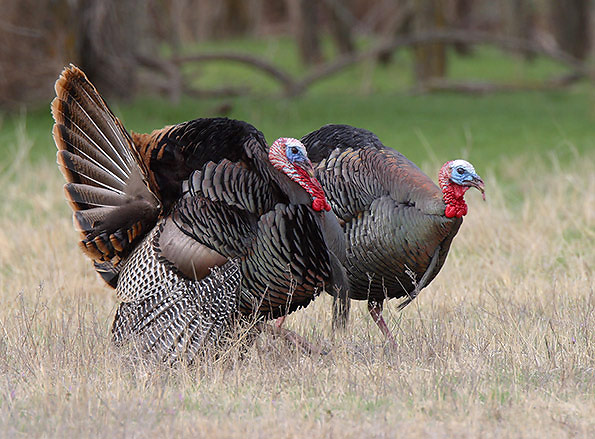
    • When strutting their stuff for a female, males not only spread their tails, but they also drag their wings on the ground (which sounds pretty impressive on pavement as I discovered), and the skin on their head changes from red to blue.
    A couple of toms strutting (note the beards)

    • That gizzard that you just removed from the turkey? That is one powerful muscle that you now hold in your hands.  The gizzard is an organ of digestion, and is especially powerful in birds that consume seeds and nuts.  Hickory nuts that normally require 124 to 336 pounds of pressure to break are completely shattered by a turkey gizzard in just over one day.  Another study found that even steel is not immune to the forces of the gizzard--12 steel needles were ground to pieces by a turkey's gizzard in just 36 hours, with no damage to the turkey!  Now put that gizzard down; you're dripping juices on your keyboard.

    • There is only one other kind of turkey in the world, the ocellated turkey, which can be found in the Yucatan Peninsula.

      Quite the handsome fellow, hua?  The turkeys clearly won the plumage lottery.

      • And despite their large size, turkeys can not only run 25 mph, but can fly 55mph!  Ever see a turkey in a tree?

      And yet more poult cuteness.  Poults can fly at just 8-10 days old!

      There you have it, more turkey trivia than your family members will be able to tolerate around the dinner table this Thursday (hey, just be glad I didn't tell you how to tell male and female turkeys apart just by their poo).  
      Have a very happy Thanksgiving, everyone!  

      Thursday, November 10, 2011

      Oh Sawfly Maggot, I Love You So

      First off, to those of you reading this whom I met at the National Association for Interpretation conference this week, hi!  (I'm waving furiously, you just can't see it)


      In my days teaching people about the wonderful outdoors, I've worked with a lot of animals, some of which others wouldn't dream of going near.  I've gently herded western diamondback snakes off of the road, picked up barked scorpions, pet alligators (and not all of them in captivity...I know...I'm nuts), and conversed with slugs, worms, millipedes, bees, and nematodes.  Many people ask "isn't there any animal that creeps you out?"  Why yes, yes there is.  Maggots.

      Maggots give me the heebie jeebies something awful.  Especially when they are surrounded by about a quadrillion of their nearest kin.  And then something happened that changed my view of maggots forever: I met the humble sawfly maggot.

      Hey, I may like the guys, but don't expect me to start talking baby talk to them.


      Some of you may remember me mentioning the sawfly in a previous post on the mini ecosystem that exists inside my compost bin. I mentioned that sawflies not only don't care about humans, but they also drive other species of flies away that are interested in ruining our day.  But the thing that really amazes me is just how good the sawfly maggot is at turning my garbage into soil.  Within days, what used to be lettuce, tomatoes, bread, and pulled weeds is reduced to an unrecognizable brown sludge.  Now that may sound gross, but think about it; these guys are faster than any other decomposer I've ever seen in a compost pile.


      In fact they are so good at what they do that some researchers and farmers are looking into the possibility of using black sawfly maggots to get rid of hog waste, a major pollutant.  The sawfly maggots that grow in the waste can also be used as food supplements for hogs and fish!


      Black sawfly maggots may not be cute and cuddly, but they have earned a new found respect for maggots in my heart.  So until the next time I turn my compost pile, little maggots, may your days be full of delicious compost.

      Thursday, October 27, 2011

      It's Always Halloween in the Natural World


      Happy almost Halloween, everyone!


      A couple of weeks ago I found myself trying to think of animals and plants that had names that were associated with Halloween.  Turns out it was a pretty fun mental exercise and a good idea for a blog post.  Now some of you may be wondering "Gee Katie, if you had this idea for a blog post weeks ago, why did you not post last week?"  Turns out having a full time job and working on one's M.S. degree takes up quite a bit of one's time. heh.  And if any of you really were wondering where my post was last week, then that means you actually follow this blog with some regularity and I love you.  I'm guessing most of my readers are more along the lines of "She posts each week?  I thought it was once a year...hua."


      Anywho, on to the Halloween-themed plants and animals!


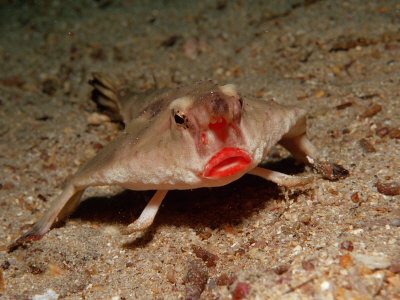
      Batfish
      Is it just me, or does this red-lipped batfish make anyone else think of Rocky Horror Picture Show?

      There are actually about 60 members of the batfish family, and no, none of them are named 'Dracula'.  Neatest thing about these guys other than their appearance?  They're poor swimmers, so get around by walking on the ocean floor using thickened pelvic and pectoral fins!

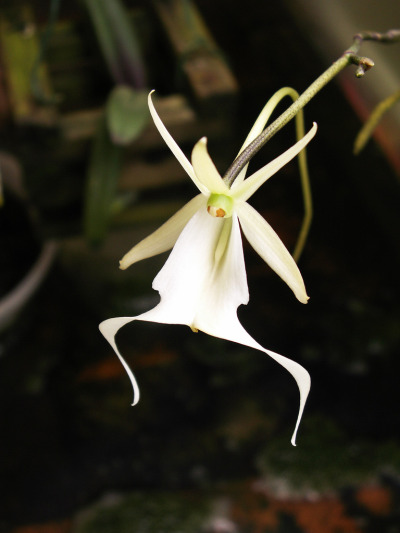
      Ghost Orchid

      The ghost orchid is native to the United States and can be found in southern Florida.  It got its name because the roots of the plant often blend in so well with its host tree that the flower seems to be floating in space just like a ghost.  Nothing scary about this ghost though, just pure beauty.

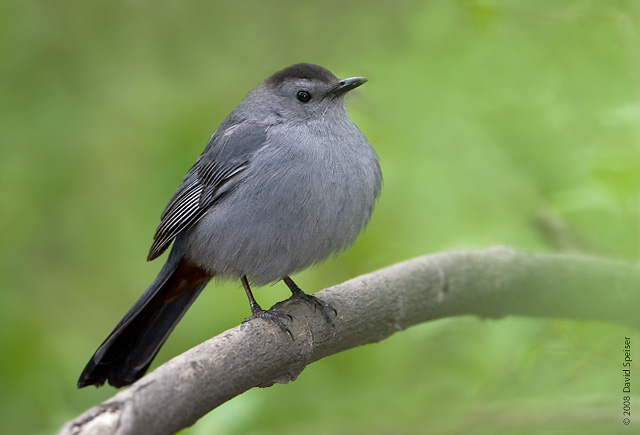
      Gray Catbird

      You guys know me, I love my birds, and the grey (gray? I still can't decide which spelling to use) catbird is no exception.  The distinctive 'meow' call that the species gives is how it got its name.  What some may not know is that the catbird is also a talented yet shy songster.  Unlike its cousin, the northern mockingbird, who likes to sing and be seen, the catbird is more likely to warble quietly from deep within a thick clump of vegetation.

      Spider Crab
      A giant Japanese spider crab in front of her...what is she taking a picture of?

      Get a load of those legs!  It's easy to see how spider crabs get their name.  However if you look again, you'll notice that it's only spiders that have 8 legs; crabs have 10, giving them one of my favorite terms I like to use to nickname my pet hermit crabs, decapods. (Want to learn more about spider crabs? Check out my blog entry on them here!)

      Witch Hazel

      Although witch hazel has a very distinct and even bewitching look to it, the witch part of its name doesn't come from entirely from a person who can turn you into a newt and is lighter than a duck ("Burrn her!").  Witch is suspected to have its origins from the Middle English wiche, meaning "pliant" or "bendable".  Although seeing as stems of witch hazel were also sometimes used as divining rods, witch may just refer to witchcraft after all.

      Goblin Shark

      Now there is a face only an Ichthyologist could love (hi Mary!).  I think the origins of this deep sea fangly fish's name are no mystery. However much about the fish itself remains a mystery, and it is thought to be one of the rarest-observed fish in the world. In addition to its distinctive snout, the goblin shark is also equipped with jaws that are able to protrude very quickly in order to snatch up soft-bodied prey.

      There you have it, some of the wonderful and unusual plants and animals that share their names with creatures we associate with this time of year.  While the ghosts, goblins, and witches of Halloween might give us a fright, each of these species are fascinating and far less scary.  Though come to think of it, if I ever saw a goblin shark in person, I'd probably give him all of my candy.

      Saturday, October 15, 2011

      The Trees are Out to Get Me

      The trees of Pennsylvania are trying to kill me.  They try to kill me every year.  Oh sure, in the fall people oooh and ahh over the magnificent beauty of fall foliage, but that's just a disguise because given the opportunity, the trees in Pennsylvania will try to kill you, too.

      Leaves aren't the only thing falling from trees in the autumn.  Here in Pennsylvania there are three kinds of trees that are dropping their fruit and making people duck and take cover.  Here are the three shady culprits and their weapons of choice.

      Assailant #1: Oaks

      Weapon of Choice: Acorns

      Sure, the mighty oak's acorns may not look like a formidable murder weapon, but that's what they want you to think.  But don't let these squirrel treats fool you, they are capable of inflicting personal injury.  Just the other day an acorn from a towering 150 year old black oak came slamming down so hard on the pavement in front of me that it made me jump and swear that the acorn hadn't just fallen, but that the tree must have thrown it at me. (Thank goodness the tree has as bad of aim as I do)  Acorns are even more deadly in great numbers.  Two years ago I was hiking on a hilly nature trail covered in a bumper crop of acorns (also known as a mine field) and nearly fell on my face several times.  

      Why do oaks want to kill me?  Maybe they're taking their frustrations out on me from having squirrels steal their nuts year after year.

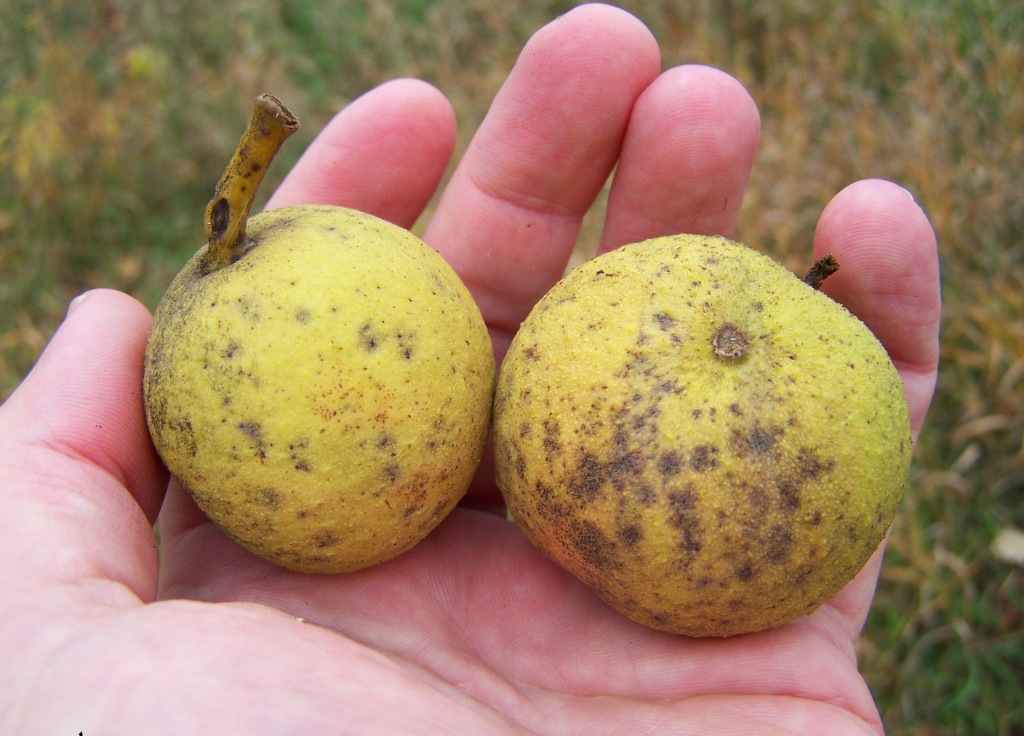
      Assailant #2: Black Walnut
      This black walnut was recently apprehended and put behind bars.
      (ok, make that "behind chain link fence")

      Weapon of Choice: Black walnuts

      The black walnut's weapon of choice packs a punch on many levels.  First, there is the immediate danger from being hit on the head by one of these green titans.  If the black walnut tree misses you on the initial drop, it can find you for revenge later.  All you have to do is touch the black juices of the walnut husk and your hands will be stained for quite some time.  This is the walnut's version of the black spot of death, a trick that it learned from the pirates of Treasure Island.  

      Even innocent fish are not immune to this villain's attacks.  The green husk of the walnut contains a chemical called juglone, which when mixed with slow-moving or stagnant water, kills all of the fish residing beneath the surface.  This is such an effective fish-killer that Native Americans were known to use black walnut fishing as a reliable way to collect fish.  It seems that the black walnut has acquired a co-conspirator...


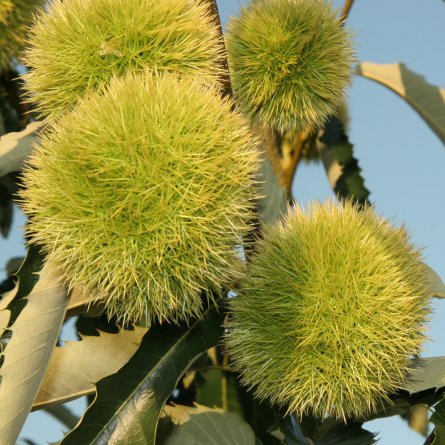
      Assailant #3: American Chestnut

      Weapon of Choice: Burrs
      The American chestnut may be iconic come the holiday season, but that's only because by then this tree will have run out of ammunition.  Make no mistake, right now this tree will leave you with anything but a sense of cheer.  No, right now this tree will leave you with a sharp, prickly, vegetative, green sea urchin sticking out of your cranium.  The burrs of the American chestnut are so sharp that I can barely manage to pick one up with my bare hands.  I can only imagine the pain of having one of these dropped on your head from 20 feet or greater must feel like (especially those poor bald-headed victims).  I think no greater explanation must be made as to just how greatly armed and dangerous this assailant is.  

      The American chestnut may have a reason for its outlash, as the species is currently under siege by chestnut blight.  I don't blame those trees that are sick for lashing out, but those trees that are healthy are really all bark and no blight.

      As you are walking the nature trails this fall, admiring the beautiful fall foliage, be sure to keep one eye open at all times and wear a hard hat.  These three assailants may be lurking in the woods near you.  The trees haven't killed me yet, but that doesn't stop them from trying.

      Friday, October 7, 2011

      It's Fall Migration...Get Out Those Life Lists!

      October 7, 2011

      As the seasons transition, you may find that the color of the leaves and daily temperatures aren’t the only thing changing.  If you’re a birder, you may notice some new feathered faces in your area as well!  Fall migration is in full swing, giving bird lovers everywhere a chance to see rare and uncommon birds as they make their way south.

      Why do birds migrate in the first place?  The most common answer is that birds migrate due to the cold temperatures.  And that is true… in a roundabout way.  Birds don’t migrate because they can’t handle the cold, their feathers act as a great form of insulation which is kind of like putting on a big, poofy sleeping bag when you need it.  Rather it’s the food of the birds that migrate that can’t handle the cold.  Birds that eat things that aren’t available in the winter, such as insects, nectar, fruit, or aquatic vegetation, must fly south in order to find food to eat.  And as they travel south, it’s our backyards that many of these birds choose to fuel up.

      In my area of Pennsylvania, fall and spring migration is a great time to see warblers such as the black-throated blue and the black and white.  I can never see or say the name “black-throated blue” without thinking that it’s really the “black and blue warbler.” Imagining a tiny bird with a shiner is kind of a funny mental image.  Today I noticed a female black-throated blue warbler (who is neither black nor blue) making her “refueling” stop at a compost pile, acrobatically catching flies with a snap! of her beak. 

      While living in Florida, I didn’t see American robins unless it was migration time.  Then these American icons would arrive en masse to descend upon the local lawns in search of worms and other tasty invertebrates.  Once when I was washing my birds’ cage outside with the hose (I have two cockatiels…they don’t migrate.), ten or so robins came down to drink from the stream of water that was running into the drive of my apartment complex.

      Although the fall and spring migrations don’t last very long, they are always a treat.  Across the United States, bird enthusiasts gather to watch hawks, songbirds, and even tiny hummingbirds at favorite stopover locations.  Hopefully you’ll spot a feathered gem this fall too!

      I've Upgraded!

      October 7, 2011


      Upon logging on to my page on Facebook today, I was promptly informed that the discussion boards are vanishing at the end of the month. Curse you Facebook and all your changes!  Well, it all works out for the better because now I have an official blog blog!  This thing is so fancy...there's underlining, I can put things in bold, I can even include pictures!


      Me getting (fiddler) crabs in Florida.

      I've graduated to a real grown up blog!  I look forward to using this new space to the fullest extent...that I'm able to figure out without enrolling in an html class.  Over the next couple of days I'll be going through the archives and sprucing them up by adding some pictures here and there.  So stay tuned, subscribe, stalk me if you will (in a friendly, non creepy, I'm-The-Nature-Geek's-biggest-fan kind of way), to see the latest changes!